Enterprise Automation Is Moving Beyond Warehouses and Manufacturing
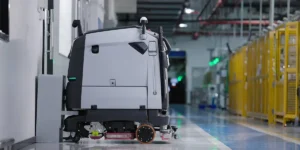
For years, automation in enterprise environments focused mainly on manufacturing lines, logistics systems, and warehouse operations. In 2026, that trend is expanding rapidly into facility operations — especially commercial cleaning.
Large organizations across industries are now testing autonomous cleaning robots as part of broader operational efficiency initiatives. From warehouses and school districts to utilities, manufacturing plants, and multi-building campuses, companies are evaluating how robotics can reduce labor pressure while improving operational consistency.
What was once considered experimental technology is quickly becoming a practical business solution.
Why Enterprises Are Exploring Cleaning Automation
Facility operations have become increasingly difficult to manage over the last several years.
Many organizations are facing:
- Labor shortages
- Rising janitorial costs
- High employee turnover
- Increasing facility sizes
- Pressure to improve operational efficiency
- Higher cleanliness expectations
- Difficulty maintaining consistent cleaning schedules
For enterprise facilities operating across multiple buildings or campuses, these challenges become even more complex.
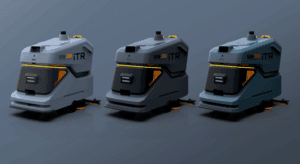
Autonomous cleaning robots help organizations automate repetitive floor cleaning tasks while allowing teams to focus on more detailed operational responsibilities.
The “Pilot Program” Approach Enterprises Are Using
One of the most common patterns among enterprise organizations is starting with a beta test or pilot program before scaling robotics across multiple facilities.
Instead of immediately deploying robots company-wide, organizations often begin by testing one or two units in a single facility to evaluate:
- Cleaning performance
- Labor savings
- Operational impact
- Ease of implementation
- Staff adaptation
- Reliability and maintenance
- Long-term ROI potential
Once the technology proves successful, companies frequently expand deployments into additional buildings, campuses, or regional locations.
This phased approach reduces risk while helping organizations build confidence internally before larger rollouts.
Why Multi-Facility Organizations See Strong ROI
One of the biggest advantages of autonomous cleaning systems is scalability.
Organizations with multiple locations often experience stronger ROI because operational improvements can be replicated across many buildings.
This is especially valuable for:
- School districts
- Universities
- Warehouses
- Distribution centers
- Manufacturing facilities
- Healthcare systems
- Large gyms and recreation centers
- Airports
- Corporate campuses
When one facility demonstrates measurable results, scaling becomes significantly easier.
Many enterprise buyers are no longer asking whether robotics will become part of facility operations — they are now evaluating how quickly implementation can happen.
Cleaning Robots Are Helping Teams Focus on Higher-Value Work
A common misconception is that autonomous cleaning robots completely replace janitorial teams.
In reality, many organizations use robotics to reduce repetitive labor demands while allowing cleaning staff to focus on tasks that still require human attention.
Examples include:
- Restroom cleaning
- Detailed sanitation
- Waste management
- Spot cleaning
- Specialty floor care
- Customer-facing maintenance tasks
Instead of eliminating teams entirely, robots often improve operational efficiency by automating repetitive floor maintenance.
For many facilities struggling with staffing shortages, this creates a more sustainable operational model.
What Enterprise Buyers Are Looking for Before Investing
As organizations evaluate autonomous cleaning technology, decision makers are focusing on more than just the robot itself.
Enterprise buyers typically evaluate:
Operational Reliability
Can the robot operate consistently in high-traffic environments?
Scalability
Can the solution expand across multiple locations?
Ease of Deployment
How quickly can facilities implement the system?
Reporting & Analytics
Does the system provide operational visibility and performance reporting?
Safety Features
Can the robot safely navigate around employees, visitors, and equipment?
Support & Training
Is there long-term support available after deployment?
For enterprise organizations, implementation strategy is often just as important as the technology itself.
The Future of Facility Operations
As operational costs continue rising, more organizations are looking for ways to automate repetitive processes without sacrificing quality or consistency.
Autonomous cleaning robots are becoming part of a much larger shift toward smarter facility operations.
Enterprises are increasingly viewing robotics not as a futuristic concept, but as a practical operational tool capable of improving efficiency, supporting facility teams, and helping organizations scale more effectively.
In 2026, the question is no longer whether automation belongs in facility operations.
The question is how quickly organizations can implement it successfully.
Looking to Explore Autonomous Cleaning Solutions?
Organizations across multiple industries are already evaluating how robotics can improve operational efficiency, reduce repetitive labor demands, and support scalable facility management strategies.
Whether you manage a warehouse, school district, manufacturing facility, or multi-building campus, autonomous cleaning technology may help modernize your operations while improving long-term efficiency.