A few years ago, robot dogs felt like something out of a sci-fi movie. Today, they’re already being used by real companies to solve real problems.
I’ve seen more businesses getting curious about these machines—not because they look impressive (which they do), but because they actually make operations safer, faster, and more efficient.
If you’re wondering whether a robot dog could make sense for your business, this guide will help you understand what they are, how they work, and where they’re being used.
What is a Robot Dog?
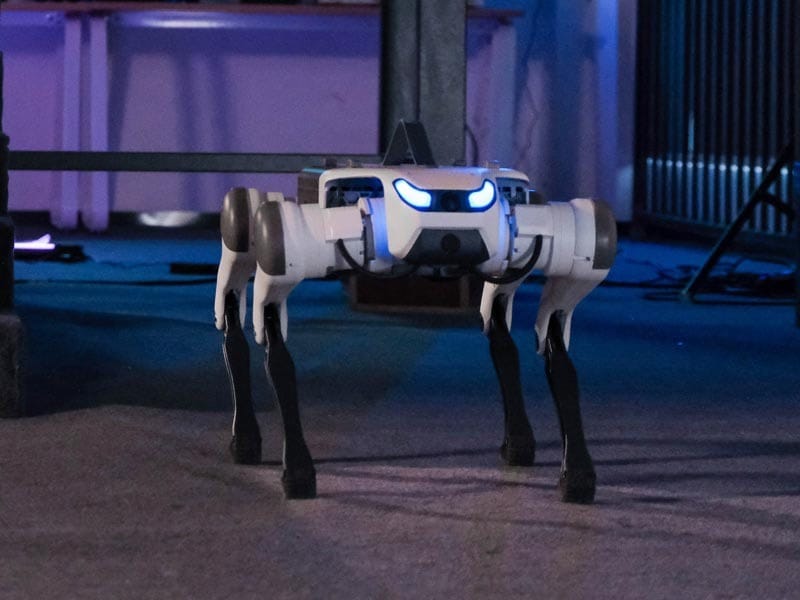
A robot dog (also called a quadruped robot) is a four-legged machine designed to move like an animal.
That might sound simple, but it changes everything.
Instead of wheels, these robots walk. That means they can:
- Go up stairs
- Move across uneven surfaces
- Navigate places where normal robots get stuck
This is exactly why companies are starting to take them seriously.
Why Not Just Use a Regular Robot?
Most traditional robots work well in controlled environments—like factory floors or smooth warehouses.
But real life isn’t always like that.
Think about:
- Construction sites
- Outdoor areas
- Facilities with stairs or obstacles
This is where robot dogs stand out. They’re built for environments that aren’t perfect.
What Can Robot Dogs Actually Do?
This is usually the biggest question.
And the answer depends on how they’re equipped—but in general, robot dogs are used for:
Inspection
They can walk through facilities, capture data, and identify issues before they become problems.
Security
Some companies use them for patrol, especially in large or complex areas where constant human monitoring is difficult.
Data Collection
With cameras, sensors, and LiDAR, they can map environments and send information in real time.
Research & Development
Universities and tech teams use them to test AI, automation, and robotics applications.
Real Robot Dog Models You Can Use Today
At Service Pro Robotics, there are already several models available depending on what you need.
D1 Ultra – Built for Real Environments
The D1 Ultra is one of the most practical options if you’re thinking about real-world use.
It’s fast, stable, and can handle complex terrain without losing balance.
This makes it a strong fit for:
- Industrial inspections
- Security patrols
- Outdoor environments
It’s not just for testing—it’s built to actually work.
AgiBot Pro EDU – For Learning and Development
If your focus is education or development, this model makes more sense.
It’s designed for:
- Universities
- Robotics labs
- Teams building custom solutions
It gives you flexibility to experiment and build on top of the platform.
X20 and X30 – More Power, More Capability
https://serviceprorobotics.com/products/x20/
https://serviceprorobotics.com/products/x30/
These models are for more demanding applications.
If you’re dealing with:
- Larger operations
- More complex environments
- Advanced integrations
Then these options give you more performance and scalability.
Lite 3 – A More Accessible Option
The Lite 3 is a great starting point.
It’s lighter, more accessible, and still very capable.
Good for:
- Entry-level use
- Demonstrations
- Smaller projects
Why Businesses Are Paying Attention Now
This isn’t just about innovation anymore—it’s about practicality.
Here’s what’s driving adoption:
1. Safety
Robot dogs can go where it’s risky for people to go.
2. Efficiency
They don’t get tired, and they can run the same task consistently.
3. Better Data
Instead of guessing, companies can collect real information from their environments.
4. Labor Support
They don’t replace teams—but they reduce the need for repetitive or dangerous work.
Is a Robot Dog Worth It?
It depends on your situation.
If your business involves:
- Inspections
- Large facilities
- Safety risks
- Repetitive manual tasks
Then yes, it’s worth exploring.
If everything you do happens in a simple, controlled environment, you might not need one yet.
Final Thoughts
Robot dogs are still new—but they’re not experimental anymore.
They’re already being used in real operations, and the number of use cases is growing quickly.
The companies that start testing and adopting this technology now will likely have an advantage over the next few years.
If you’re curious, the best next step is simple:
Take a closer look at the models and think about where they could fit into your operation.