This is one of the most common questions facility managers ask when considering autonomous cleaning for the As automation becomes more common across industries, many operations and facilities leaders find themselves asking the same question: How do I justify investing in robotics for my facility?
The conversation is no longer about whether robotics will play a role in operations — it’s about how to evaluate them properly, align them with real business goals, and communicate their value clearly to leadership teams.
When it comes to autonomous cleaning robots, building a strong business case means looking beyond surface-level efficiency and focusing on long-term operational impact.
Start With the Real Operational Challenges
Every solid business case begins with a clear understanding of the problem. In most facilities, cleaning challenges are not isolated incidents — they are ongoing operational pressures.
Operations leaders deal with staffing instability, inconsistent cleaning results, limited coverage during off-hours, and increasing expectations around cleanliness and presentation. These challenges don’t just affect cleanliness; they affect productivity, safety, brand perception, and employee morale.
Autonomous cleaning robots are designed to address these recurring issues at their core, not as a temporary fix, but as a structural improvement.
Shift the Conversation From Tasks to Outcomes
One of the most common mistakes when evaluating robotics is focusing too narrowly on individual tasks. Cleaning robots are not simply automated mops or scrubbers. Their real value comes from the outcomes they enable.
Instead of asking, “What task does this robot replace?”
A stronger question is, “What operational outcomes does this robot improve?”
These outcomes often include:
- more consistent cleaning standards
- reduced operational variability
- better visual presentation of the facility
- improved staff productivity
- fewer disruptions caused by staffing gaps
When framed this way, the conversation naturally moves from cost to value.
Consider Consistency as a Strategic Advantage
In large or high-traffic facilities, inconsistency is one of the biggest hidden risks. Manual cleaning quality varies by shift, by individual, and by workload. Over time, this variability leads to complaints, rework, and operational stress.
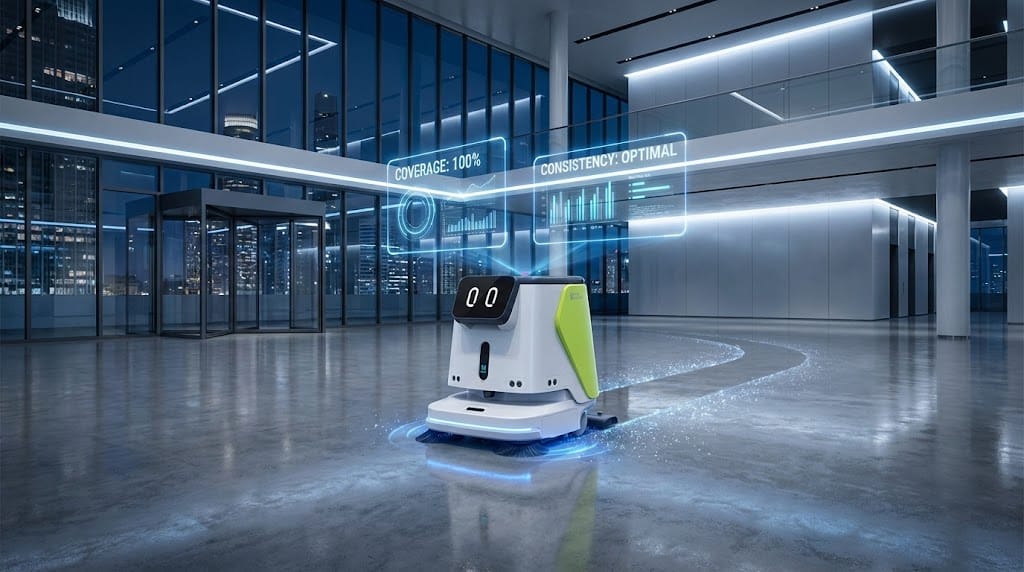
Autonomous cleaning robots introduce predictability. They follow defined routes, maintain consistent performance, and operate on schedule. This consistency is especially valuable for organizations that need to meet internal standards, brand expectations, or regulatory requirements.
From a business case perspective, predictability reduces risk — and reduced risk is a measurable operational advantage.
Evaluate How Robotics Supports Existing Teams
A strong business case does not position robotics as a replacement for people. Instead, it shows how automation supports teams by removing repetitive, physically demanding tasks.
When robots handle large-area floor cleaning, staff members can focus on detailed work, high-touch areas, and responsibilities that require human judgment. This often leads to better use of labor, lower burnout, and improved job satisfaction.
For operations leaders, this alignment between technology and workforce is critical. Solutions that strengthen teams are far easier to justify and implement successfully.
Account for Long-Term Operational Stability
Short-term fixes rarely solve long-term operational problems. Staffing fluctuations, overtime dependency, and reactive scheduling create instability that compounds over time.
Autonomous cleaning robots contribute to operational stability by providing a dependable cleaning baseline every day. This stability simplifies planning, reduces last-minute adjustments, and allows leaders to focus on higher-level priorities instead of daily firefighting.
When building a business case, long-term stability is often more valuable than short-term gains.
Align Robotics With Organizational Goals
The strongest business cases connect technology decisions directly to broader organizational goals. For many companies, these goals include improving customer experience, maintaining a professional image, increasing operational resilience, and preparing for future growth.
Cleaning robots support these objectives by improving how facilities look, how teams operate, and how consistently standards are met. When automation is positioned as a strategic tool rather than a tactical upgrade, it becomes much easier to gain internal alignment.
Make the Case Clear, Practical, and Measurable
A successful robotics business case doesn’t rely on hype. It focuses on practical improvements, operational clarity, and real-world impact.
By clearly defining challenges, aligning outcomes with goals, and showing how autonomous cleaning fits into existing workflows, operations leaders can confidently justify the adoption of robotics as a smart, forward-looking decision.
In today’s environment, automation is no longer about replacing what works — it’s about strengthening operations so they work better, longer, and more reliably.
If you’re evaluating how autonomous cleaning robots could fit into your operations, the next step is understanding how these solutions adapt to real facilities and real workflows.
Discover how cleaning robots support modern operations and facilities.
Discover how autonomous cleaning robots can support your facility.
👉 Learn more here: https://serviceprorobotics.com/cleaning-robots-for-companies-2026