This is one of the most common questions facility managers ask when considering autonomous cleaning for the first time. Many assume cleaning robots only make sense for massive warehouses or airports, while others worry that their layout is too tight, too busy, or too complicated for automation.
The reality in 2026 is very different.
Modern cleaning robots are designed to adapt not only to large spaces, but also to smaller and more complex environments.
Why Facility Size Is No Longer a Limitation
A common misconception is that cleaning robots require huge open areas to be effective. While they do perform extremely well in large spaces, size alone is no longer the deciding factor.
What matters more is how cleaning tasks are distributed throughout the day. Even in smaller facilities, repetitive floor cleaning consumes time, creates scheduling pressure, and depends heavily on staff availability. Cleaning robots are designed to handle exactly these repetitive tasks, regardless of whether the space is a hotel hallway, a restaurant dining area, a retail store, or a corporate office.
In many cases, smaller facilities benefit even more because robots help maintain consistent cleanliness without requiring additional staff or extended shifts.
Complex Layouts Are Not a Problem — They’re the Design Target
Another concern facility managers have is complexity. Narrow corridors, furniture, changing layouts, high-traffic zones, and mixed-use areas often feel incompatible with automation.
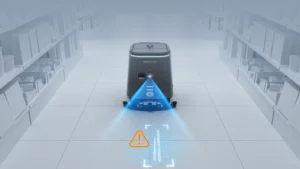
However, modern cleaning robots are built specifically to navigate real-world environments. They use advanced mapping and navigation technology to understand the layout of a space, recognize obstacles, and adjust their routes dynamically. Instead of following rigid patterns, they adapt to movement, foot traffic, and daily changes.
This makes them suitable for environments like:
- hotels with guest movement
- restaurants with tables and chairs
- retail stores with changing displays
- hospitals and schools with constant activity
- offices with tight corridors and furniture
Complexity is not a limitation — it’s a scenario robots are designed for.
High-Traffic Areas Benefit the Most
Facilities with constant foot traffic often struggle to keep floors looking clean throughout the day. Manual cleaning usually happens in short windows, leaving long periods where the space slowly deteriorates.
Cleaning robots can operate during off-hours or low-traffic times, maintaining cleanliness without disrupting operations. This allows facilities to look consistently clean before opening, after closing, and between peak periods.
The result is a better visual standard and less pressure on staff during busy hours.
Robots Work With Your Team, Not Against It
Another hesitation comes from concern about staff disruption. Facility managers worry about training complexity or operational changes.
In reality, cleaning robots are designed to support existing teams. Once the robot is mapped and scheduled, daily operation becomes simple. Staff members are not replaced — they’re freed from the most physically demanding tasks and can focus on detailed cleaning and customer-facing responsibilities.
This creates smoother workflows and often improves employee satisfaction.
So, Is Your Facility a Good Fit?
In most cases, the answer is yes.
Facilities of all sizes and layouts are successfully using cleaning robots today. The key factors are not square footage or complexity, but the desire for:
- consistent cleaning standards
- reduced operational stress
- better use of staff time
- improved appearance throughout the day
If your facility has floors that need regular cleaning, a cleaning robot can almost certainly adapt to your environment.
The Bottom Line
In 2026, cleaning robots are no longer limited to large, simple spaces. They are flexible, intelligent, and designed to handle the realities of modern facilities.
Whether your space is small, large, simple, or complex, autonomous cleaning is not about fitting your facility into the robot — it’s about the robot adapting to your facility.
Discover how autonomous cleaning robots can support your facility.
👉 Learn more here: https://serviceprorobotics.com/cleaning-robots-for-companies-2026