Buying an autonomous cleaning robot is rarely a decision made from a product specification sheet alone.
For facility managers, operations leaders, procurement teams, and executives, the bigger question is usually:
Does cleaning automation make financial and operational sense for our facility?
That requires looking beyond the purchase price.
A useful business case should evaluate the cleaning work being performed today, determine how much of that work can realistically be automated, calculate the cost of the current process, and compare those numbers with the total cost and expected utilization of the robotic solution.
Here’s how to approach that analysis.
Start With the Cleaning Task, Not the Robot
Before comparing robots, document your current cleaning operation.
For each repetitive floor-cleaning task, identify:
| Question | What to Measure |
|---|---|
| How much floor is cleaned? | Actual cleanable square footage |
| How often? | Cleans per day/week |
| How long does it take? | Labor hours |
| Who performs it? | Number of employees |
| What equipment is used? | Sweeper, scrubber, mop, vacuum |
| When is it performed? | Day, night, between shifts |
| What does it cost? | Labor + equipment + maintenance |
This creates a baseline.
Without that baseline, it’s difficult to know whether automation actually improves the operation.
Calculate Your Current Labor Cost
Suppose a facility spends four employee hours per day operating floor-cleaning equipment.
Rather than looking only at the employee’s hourly wage, the business case should consider the actual cost associated with those hours.
That can include:
Hourly compensation + payroll burden + benefits + overtime where applicable.
Then multiply that by the number of cleaning hours and operating days.
The objective isn’t to assume the employee disappears after automation.
Instead, determine the value of the repetitive hours that could potentially be redirected to other work.
That’s an important distinction.
Calculate Robot Utilization
One of the most important—and often overlooked—numbers is utilization.
A robot that is technically capable of operating eight hours per day doesn’t necessarily create eight hours of productive value.
Real utilization may be affected by:
- Charging
- Water refilling
- Waste disposal
- Blocked routes
- Facility traffic
- Maintenance
- Setup
- Areas inaccessible to the robot
So the business case should use realistic productive operating time, not theoretical maximum runtime.
Measure Cleanable Area, Not Building Size
This is another common mistake.
A 200,000-square-foot building does not automatically represent 200,000 square feet of robotic cleaning opportunity.
Racking, furniture, equipment, offices, restricted areas, stairs, production machinery, and other obstacles can substantially reduce the accessible floor area.
The more useful number is:
Total floor area the robot can realistically clean during normal operations.
This makes productivity calculations much more accurate.
Compare Cost Per Cleaning Hour
Once you understand your current process and expected robot utilization, you can begin comparing the two approaches.
For the existing operation, consider:
Labor + existing equipment + maintenance + consumables.
For robotic cleaning, consider:
Robot cost or lease + maintenance + consumables + deployment + remaining human involvement.
ServicePro already provides a Human vs. Robot Cleaning calculator that considers square footage, janitorial cost, employees per shift, cleaning frequency, robot price, maintenance, and estimated savings.
That type of model is much more useful than simply asking which robot has the lowest purchase price.
Don’t Assume 100% Labor Replacement
A credible ROI model should not assume autonomous cleaning eliminates every manual cleaning task.
People are still needed for work such as:
- Detailed cleaning
- Corners and inaccessible areas
- Restrooms
- Stairs
- Unexpected spills
- Equipment maintenance
- Robot oversight
- Tasks requiring judgment
The better question is:
How many repetitive floor-cleaning hours can we automate?
If a robot takes over several hours of repetitive sweeping or scrubbing each day, employees can potentially spend those hours on higher-value cleaning and facility tasks.
That produces a much more realistic business case.
Factor in Cleaning Consistency
Not every benefit has to come directly from labor savings.
Automation can also create operational value through repeatability.
A robot can follow planned routes and scheduled cleaning cycles rather than depending entirely on when an employee becomes available.
Depending on the facility, that may mean:
- More predictable cleaning schedules
- More frequent floor coverage
- Consistent routes
- Additional cleaning during off-hours
- Better visibility into completed cleaning tasks
These benefits can matter even when they’re harder to express as a simple dollar amount.
Consider the Total Cost of Ownership
Purchase price is only one part of the investment.
When comparing solutions, ask about:
Robot or lease cost
Deployment and configuration
Charging or docking equipment
Maintenance
Consumables
Replacement components
Warranty
Training
Technical support
A lower-priced robot isn’t necessarily less expensive over its useful life.
Similarly, a more capable robot isn’t automatically the better investment if the facility won’t utilize those capabilities.
The goal is to match the solution to the workload.
Purchase vs. Lease
Another consideration is how the robot will be financed.
ServicePro currently offers purchase and leasing options for its commercial robotic solutions.
Purchasing may be attractive for organizations planning long-term use and comfortable with the upfront capital expenditure.
Leasing may make it easier to introduce automation with a lower initial investment and predictable payments.
The correct comparison should consider total cost over the expected deployment period, not simply the initial payment.
How to Think About Payback Period
A simple payback calculation compares the initial investment with the annual economic benefit generated by automation.
For example, if a robotic deployment costs $40,000 and creates $20,000 in measurable annual savings, the simple payback period would be approximately two years.
That’s only an illustration—not a ServicePro performance claim.
Real calculations should use the facility’s actual labor costs, cleaning hours, robot utilization, maintenance expenses, financing structure, and other operational variables.
When Does the Business Case Become Stronger?
Cleaning automation tends to deserve greater consideration when the facility has:
- Large repetitive floor areas
- Multiple cleaning shifts
- Significant time spent operating sweepers or scrubbers
- Frequent cleaning requirements
- Difficulty maintaining consistent floor coverage
- Opportunities to run robots during additional hours
- Multiple locations with similar cleaning workflows
The more consistently the robot can perform useful work, the easier it becomes to justify the investment.
One Robot vs. Multiple Locations
Enterprise buyers should also look beyond a single facility.
A successful deployment at one location can provide actual data for evaluating additional sites.
For example, a company can measure:
Actual coverage → human intervention → cleaning hours automated → operating cost → cleaning performance
Then use those results to determine whether similar facilities could benefit from the same approach.
This is much more defensible than immediately purchasing multiple robots based on projected savings alone.
Why a Proof of Concept Matters
Before committing to a larger deployment, companies can test assumptions in the actual operating environment.
A proof of concept can answer questions such as:
How much floor can the robot actually clean?
How much human intervention does it require?
Can it operate during normal facility traffic?
How frequently can it run?
Which manual tasks remain?
Does the cleaning result meet expectations?
These numbers can then replace assumptions in the ROI model with real facility data.
That aligns very well with ServicePro’s enterprise approach: test the solution, measure the results, and then determine whether scaling makes sense.
Cleaning Robot ROI FAQ
How do you calculate ROI for a commercial cleaning robot?
Start by measuring current cleaning labor, equipment costs, cleaning frequency, and cleanable floor area. Then compare those costs with robot acquisition or leasing, maintenance, deployment, consumables, remaining manual labor, and realistic utilization.
Do cleaning robots eliminate cleaning labor?
They are better evaluated as tools for automating repetitive floor-cleaning tasks. Human workers remain important for detailed cleaning, maintenance, exceptions, and work requiring judgment.
Is a cleaning robot worth it for a small facility?
Facility size alone doesn’t determine ROI. ServicePro notes that smaller or more complex facilities can still be candidates when they have repetitive cleaning tasks and scheduling pressure.
Should we buy or lease a cleaning robot?
It depends on capital availability, expected deployment period, utilization, and financing preferences. ServicePro offers both purchase and leasing options.
How can we validate the ROI before a larger deployment?
A demo or proof of concept can provide real information about coverage, cleaning performance, utilization, and required intervention before scaling.
Build the Business Case With Real Facility Data
The strongest argument for cleaning automation isn’t:
“Robots are cheaper than people.”
It’s:
“Here is the repetitive workload we’re performing today, here is what it costs, here is what can realistically be automated, and here is the measurable impact.”
That is a much stronger conversation for operations teams, finance departments, procurement, and executive leadership.
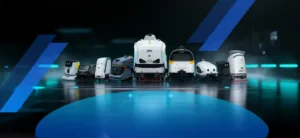
ServicePro Robotics offers autonomous commercial cleaning solutions ranging from sweepers and scrubbers to multi-purpose cleaning platforms. Its current portfolio includes products such as MT1, MT1 Max, Oscar Pro, C200, C300, AGIBOT C5, BG1 and others.
Calculate Your Potential Savings
Test the technology in your actual facility, measure the results, and build your automation decision around real operational data.