If you’re researching commercial cleaning automation, one of your first questions is probably:
How much does a commercial cleaning robot cost?
The answer depends heavily on what you need the robot to do.
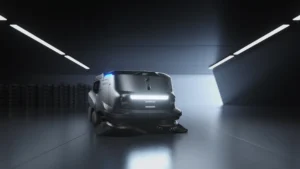
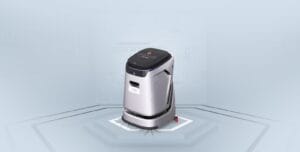
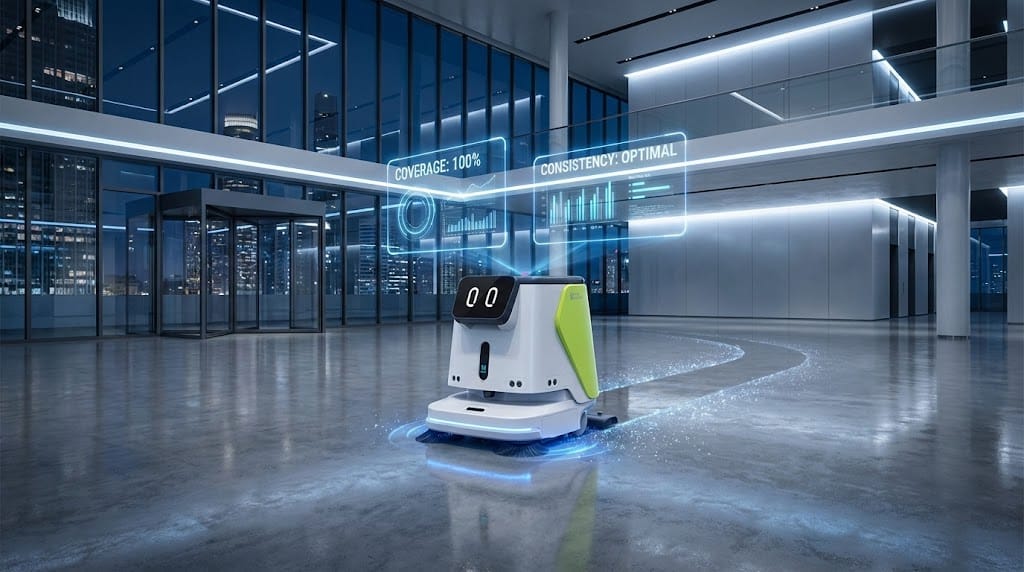
Commercial cleaning robots range from compact machines designed for smaller indoor environments to large autonomous sweepers and scrubbers built for warehouses, manufacturing plants, airports, distribution centers, and other large facilities.
The robot itself is also only one part of the investment.
When evaluating the real cost of cleaning automation, businesses should consider:
- Robot type and cleaning capabilities
- Facility size
- Cleaning productivity
- Runtime and charging requirements
- Autonomous docking or workstation capabilities
- Delivery and setup
- Training
- Maintenance and support
- Warranty coverage
- Accessories
- Purchase, lease, or rental structure
This guide explains what affects commercial cleaning robot pricing and how to determine whether the investment makes sense for your facility.
Why Commercial Cleaning Robot Prices Vary So Much
Comparing cleaning robots based only on purchase price can be misleading.
A compact autonomous scrubber operating in a smaller commercial building has very different requirements from a large industrial sweeper expected to clean hundreds of thousands of square feet.
The more useful question isn’t simply:
“Which robot is cheapest?”
It’s:
“Which robot can perform the cleaning task we need to automate at the right total cost?”
Here are some of the biggest factors affecting price.
1. Type of Cleaning Robot
The first major factor is what the robot actually does.

Autonomous Sweepers
Robotic sweepers are designed primarily to collect:
- Dust
- Dirt
- Paper
- Packaging debris
- Leaves
- Other loose material
They’re often considered for warehouses, distribution centers, manufacturing plants, parking areas, and other large facilities.
ServicePro currently offers autonomous sweepers including the PUDU MT1, MT1 Max, MT1 Vac and several larger commercial sweeping platforms.
Autonomous Floor Scrubbers
Robotic scrubbers are designed for hard floors requiring deeper wet cleaning.
They can be useful for:
- Dirt attached to floors
- Marks
- Residue
- High-traffic hard surfaces
- Routine floor washing
ServicePro’s current lineup includes dedicated and multi-purpose scrubbing solutions such as the C200, C300, AGIBOT C5 and BG1.
Multi-Purpose Cleaning Robots
Some robots combine several cleaning functions.
For example, Oscar can sweep, mop, scrub and vacuum, making this type of platform potentially useful for facilities with several cleaning requirements rather than one repetitive task.
Because these machines perform different jobs, comparing their prices directly doesn’t always tell you which one provides the better value.
2. Facility Size and Cleaning Capacity
Facility size can significantly affect which robot you need.
But don’t use total building square footage alone.
Instead, calculate your cleanable floor area.
A 300,000-square-foot warehouse may contain:
- Storage racks
- Offices
- Machinery
- Loading areas
- Restricted zones
- Shelving
- Areas inaccessible to the robot
The actual area available for autonomous cleaning may therefore be considerably smaller.
Larger cleanable areas may require:
- Higher cleaning productivity
- Longer runtime
- Larger tanks or debris containers
- Faster charging
- Autonomous charging
- Multiple robots
Those requirements can change the overall investment significantly.
3. Navigation and Autonomous Technology
Commercial cleaning robots aren’t simply traditional cleaning machines with motors attached.
Navigation technology is a major part of the system.
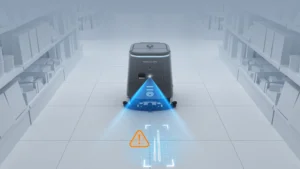
Depending on the robot, autonomous navigation may use combinations of:
- LiDAR
- Cameras
- VSLAM
- Depth cameras
- Ultrasonic sensors
- AI vision
- Environmental mapping
- Obstacle detection
More advanced environments may require more sophisticated perception.
For example, a robot operating overnight in a predictable empty hallway has a different navigation challenge from one working in a warehouse where forklifts, employees, carts, and pallets are constantly moving.
That difference should be considered when evaluating price.
4. Runtime and Battery Requirements
Runtime matters because a robot only creates value while it is being productively used.
For smaller facilities, a few hours of cleaning may be sufficient.
Large warehouses or multi-shift facilities may require substantially longer operation.
When comparing robots, evaluate:
Runtime
How long can it operate during the required cleaning mode?
Charging time
How long does it remain unavailable while charging?
Automatic charging
Can it return to its charger without employee intervention?
Resume capability
Can it continue its cleaning route after charging?
The cheapest machine may not necessarily be the lowest-cost solution if it requires significantly more human intervention or cannot cover the required area efficiently.
5. Docking Stations and Workstations
Another pricing consideration is whether the deployment includes an automated workstation.
Depending on the cleaning system, a workstation may perform functions such as:
- Charging
- Clean-water refilling
- Wastewater disposal
- Tank rinsing
- Waste disposal
These capabilities can reduce the amount of employee interaction required during daily operation.
But they can also represent an additional equipment cost.
For larger facilities, the question becomes whether the increased autonomy justifies the additional investment.
6. Setup, Delivery and Training
Businesses should also ask what is included beyond the robot itself.
Commercial robotic deployments may involve:
- Shipping or delivery
- Site setup
- Mapping
- Configuration
- Employee training
- Initial deployment support
ServicePro states that it handles delivery, setup, configuration and staff training for its robotic solutions.
These services matter because successful automation depends on more than simply placing a robot inside the building.
7. Maintenance and Warranty
Like any commercial equipment, cleaning robots require ongoing maintenance.
Depending on the machine, this may include replacement or servicing of:
- Brushes
- Squeegees
- Filters
- Batteries
- Sensors
- Wheels
- Cleaning components
- Water-system components
Businesses should therefore evaluate both the initial purchase price and the expected operating cost.
ServicePro currently offers maintenance packages and remote or on-site technical support, while individual pricing configurations may also include extended-warranty options.
Buying vs. Leasing a Commercial Cleaning Robot
One important decision is whether to purchase or lease.
ServicePro currently offers flexible purchase and leasing options across its commercial robot lineup.
Purchasing
Purchasing may make sense when:
- The organization has available capital
- The robot will be used for several years
- Long-term ownership is preferred
- The company wants to avoid ongoing lease payments
The upfront investment will generally be higher.
Leasing
Leasing may be attractive when:
- Lower upfront investment is important
- The business prefers predictable monthly expenses
- The organization wants to preserve capital
- The company is evaluating automation before a larger deployment
Neither approach is automatically better.
The decision should be based on the organization’s budget, accounting preferences, deployment plans, and expected utilization.
What Other Costs Should You Consider?
When requesting commercial cleaning robot pricing, don’t ask only for the robot’s retail price.
Ask for the total deployment cost.
Depending on the solution, that may include:
| Cost | What to Consider |
|---|---|
| Robot | Base equipment |
| Delivery | Transportation to facility |
| Setup | Mapping and deployment |
| Workstation | Charging/water/waste automation |
| Accessories | Brushes, chargers and other equipment |
| Training | Staff onboarding |
| Warranty | Standard or extended coverage |
| Maintenance | Ongoing service |
| Consumables | Brushes, filters, pads and related items |
This gives you a much more useful number for comparing solutions.
Commercial Cleaning Robot Price vs. Cost of Manual Cleaning
This is where the conversation becomes more important than the purchase price.
Imagine two robots:
Robot A costs less but automates only a small percentage of your cleaning workload.
Robot B costs more but can consistently automate several hours of repetitive cleaning every day.
Robot B may ultimately provide better economics.
That’s why businesses should compare the robot against their current cleaning operation, not only against another robot.
ServicePro’s existing pricing page follows this approach with a Human vs. Robot Cleaning calculator that considers variables such as square footage, hourly janitorial cost, staffing, shifts, robot cost, maintenance and estimated annual savings.
How to Calculate the Potential ROI of a Cleaning Robot
A useful ROI analysis starts with your current operation.
Document:
Current labor
How many employee hours are spent performing the cleaning task?
Cleaning frequency
How many times per day or week does the area need cleaning?
Cleanable area
How much floor area actually needs to be covered?
Current equipment
What machines are already being operated?
Operating schedule
Does the facility operate one shift, two shifts, or 24/7?
Robot utilization
How many productive hours could the robot realistically operate?
Remaining human work
Which cleaning tasks would still require employees?
The objective shouldn’t be to assume that a robot eliminates the entire cleaning workforce.
A more realistic analysis determines which repetitive cleaning hours can be automated and what operational value that creates.
When Does a More Expensive Cleaning Robot Make Sense?
Higher-capacity equipment can make economic sense when it is actually utilized.
Consider a large distribution center operating multiple shifts.
If the facility requires repeated floor cleaning across a significant area, factors such as:
- Longer runtime
- Higher cleaning productivity
- Larger tank capacity
- Automatic charging
- Autonomous water management
- Better navigation
may be more valuable than simply choosing the machine with the lowest purchase price.
Conversely, purchasing a large industrial platform for a small commercial facility could result in unnecessary capacity.
The robot should match the workload.
How Much Does a Warehouse Cleaning Robot Cost?
Warehouse cleaning robot pricing depends heavily on the cleaning problem.
A warehouse primarily dealing with loose debris may need an autonomous sweeper.
A warehouse with hard floors requiring washing may need an autonomous scrubber.
A large facility may even benefit from both.
For example, ServicePro currently lists robots ranging from PUDU MT1-series autonomous sweepers through C200/C300 scrubbers and larger commercial cleaning platforms.
This is why a warehouse should be evaluated based on:
- Cleanable square footage
- Floor type
- Debris
- Traffic
- Operating schedule
- Required cleaning frequency
before selecting a machine.
Should You Test a Cleaning Robot Before Buying?
For larger investments, a demonstration or proof of concept can be extremely valuable.
Specifications tell you what a robot is designed to do.
A real-world test tells you what it can do inside your facility.
A test can help evaluate:
- Real cleaning coverage
- Floor compatibility
- Navigation
- Employee interaction
- Forklift and equipment traffic
- Cleaning effectiveness
- Required human intervention
- Workflow integration
This becomes particularly important for organizations considering multiple robots or deployments across several locations.
If your facility mixes hard floors and carpet, multi-purpose cleaning robots that scrub, sweep, vacuum and mop can replace several machines. For model-specific numbers, see our robot pricing pages or book a demo for a site-specific quote.
Commercial Cleaning Robot Pricing FAQ
How much does a commercial cleaning robot cost?
Pricing varies by robot type, cleaning capabilities, size, navigation technology, accessories, workstation requirements, support and deployment structure. ServicePro offers both purchase and leasing options, and many models have dedicated pricing configurations.
Can you lease a commercial cleaning robot?
Yes. ServicePro currently offers leasing options for multiple commercial cleaning robots.
Is leasing cheaper than buying?
Leasing can reduce the initial capital requirement, while purchasing may make more sense for organizations planning long-term ownership. The better option depends on the specific robot, financing terms, utilization and company requirements.
Are autonomous cleaning robots worth the cost?
They can be when the workload justifies automation. Facility size, cleaning frequency, labor requirements, robot utilization, maintenance and existing equipment should all be considered.
Does the robot price include installation?
This depends on the quote and deployment. ServicePro states that it provides delivery, setup, configuration and staff training, so buyers should confirm exactly which services and costs are included in their specific proposal.
Do commercial cleaning robots require maintenance?
Yes. Autonomous robots are commercial equipment and require ongoing maintenance. ServicePro offers maintenance packages and technical support.
Can I test a cleaning robot before purchasing?
ServicePro says it can arrange live demonstrations at a customer’s location or at demonstration sites. For larger deployments, testing can help determine whether a robot is suitable before scaling.
Can You Lease or Finance a Commercial Cleaning Robot?
Commercial cleaning robots may be available through different purchasing and financing structures depending on the robot, deployment size, and customer requirements. For organizations evaluating autonomous cleaning without making a full upfront investment, it is worth discussing available financing, leasing, or deployment options with a ServicePro Robotics specialist.
For larger facilities or organizations evaluating multiple units, a Proof of Concept can also help validate cleaning performance, labor impact, and operational fit before a broader deployment.
Get Commercial Cleaning Robot Pricing for Your Facility
The most useful question isn’t:
“What is the cheapest commercial cleaning robot?”
It’s:
“What cleaning solution makes financial and operational sense for my facility?”
The answer depends on your floor area, cleaning requirements, operating schedule, current labor workflow, and level of automation.
ServicePro Robotics offers commercial autonomous sweepers, scrubbers and multi-purpose cleaning robots for environments ranging from commercial buildings to warehouses and industrial facilities.
Instead of choosing a robot based only on a price or specification sheet, evaluate the complete deployment and the cleaning task you want to automate.
Ready to understand your options?
Get Pricing for Your Facility
Talk to an Automation Specialist
ServicePro can help evaluate your facility and determine which cleaning robot, purchase structure, or leasing option fits your operation.