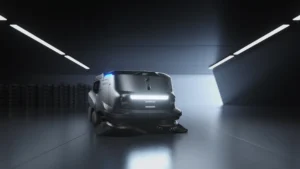
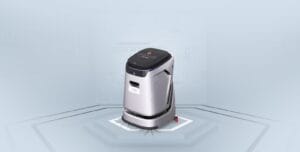
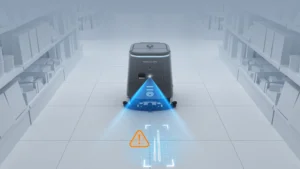
Autonomous floor scrubbers are becoming a serious option for organizations that need to clean large commercial spaces more consistently without relying entirely on manually operated equipment.
Warehouses, hospitals, airports, manufacturing plants, schools, retail stores, hotels, and office buildings can all contain large amounts of hard flooring that need to be cleaned repeatedly.
Traditional scrubbers still have an important role, but autonomous scrubbers add another capability:
the ability to perform repeatable floor-cleaning routes with limited operator involvement.
Modern robotic scrubbers can combine autonomous navigation, obstacle detection, scheduled cleaning, water management, automatic charging, and—in some cases—AI-powered stain detection.
But there is no single autonomous floor scrubber that is best for every facility.
The right robot depends on factors such as:
- Facility size
- Floor type
- Cleaning frequency
- Type of dirt or residue
- Traffic levels
- Required runtime
- Water capacity
- Navigation complexity
- Available support and maintenance
This guide compares several autonomous floor scrubbers available through ServicePro Robotics in 2026 and explains where each one may fit best.
What Is an Autonomous Floor Scrubber?
An autonomous floor scrubber is a commercial cleaning machine capable of scrubbing hard floors while navigating a facility with limited human control.
Instead of requiring an employee to drive the machine continuously, the robot can follow mapped cleaning routes and respond to obstacles in its environment.
Depending on the model, autonomous scrubbers may include:
- LiDAR
- Cameras
- Ultrasonic sensors
- AI vision
- Obstacle detection
- Automatic route planning
- Auto charging
- Water refill and drainage
- Wastewater disposal
- Cleaning-performance monitoring
Some robots are dedicated primarily to floor scrubbing, while others combine several cleaning modes such as sweeping, vacuuming, mopping, and scrubbing.
That distinction is important when selecting a robot.
Quick Comparison: Best Autonomous Floor Scrubbers to Consider in 2026
| Robot | Main Cleaning Capability | Best Potential Fit |
|---|---|---|
| AGIBOT C5 | Sweeping + scrubbing + dust mopping | Large commercial and industrial hard-floor environments |
| Oscar Pro | Sweep + scrub + vacuum + mop | Mixed-floor and multi-purpose commercial facilities |
| SC50 | Autonomous floor scrubbing | Small and medium indoor facilities |
| C200 | Unmanned floor scrubbing | Medium-sized commercial environments |
| BG1 | Large scrubber-dryer automation | Large-area commercial and industrial cleaning |
This isn’t a ranking from “best” to “worst.”
Each robot is designed for different operational requirements.
The better question is:
Which autonomous floor scrubber is best for your facility?
1. AGIBOT C5 — Best for Large Hard-Floor Environments
The AGIBOT C5 is one of the strongest options in the ServicePro lineup for organizations that need autonomous scrubbing across medium and large spaces.
It combines:
- Sweeping
- Scrubbing
- Dust mopping
ServicePro lists a maximum cleaning efficiency around 1,980 m²/h, a 90-liter water tank, approximately 25 kg of scrubbing pressure, and a 550 mm washing width.
The robot can also connect to a workstation capable of:
- Automatic charging
- Fresh-water refilling
- Wastewater disposal
- Wastewater tank rinsing
That can reduce the number of times employees need to manually interact with the machine during a cleaning cycle.
Where AGIBOT C5 may fit best
ServicePro lists applications including:
- Airports
- Industrial buildings
- Supermarkets
- Office buildings
- Hotels
- Hospitals
- Shopping malls
Its larger cleaning capacity makes it particularly relevant for facilities where routine hard-floor scrubbing represents a significant workload.
Potential fit
Large commercial facilities, industrial buildings, airports, supermarkets, and other environments requiring repeated hard-floor scrubbing.
2. Oscar Pro — Best Multi-Purpose Autonomous Cleaning Robot
Not every facility needs a dedicated scrubber.
Some buildings contain several different floor types and cleaning requirements.
The Oscar Pro takes a more flexible approach.
It supports:
- Sweeping
- Scrubbing
- Vacuuming
- Mopping
ServicePro describes Oscar Pro as an AI-powered autonomous cleaning robot using LiDAR and visual positioning.
One of its most interesting capabilities is AI spot scrubbing.
The robot can detect common wet stains and use dynamic path planning to respond to specific dirty areas instead of treating every part of the building exactly the same.
ServicePro also lists:
- Around 5 hours runtime for scrubbing
- 15 L clean-water tank
- 15 L dirty-water tank
- Automatic charging
- Optional automatic water refill and drainage
- Real-time cleaning-performance detection
Oscar Pro can also change cleaning behavior based on floor type and cleanliness level.
That makes it different from a traditional dedicated scrubber.
Where Oscar Pro may fit best
Oscar Pro may make sense for facilities with:
- Different floor types
- Both hard floors and carpet
- Frequent spot cleaning
- Mixed cleaning requirements
- Areas where one robot needs to perform several tasks
Potential fit
Hotels, offices, healthcare facilities, retail spaces, schools, and other mixed-use commercial buildings.
3. SC50 — Best for Small and Medium Indoor Facilities
The SC50 is an autonomous floor scrubber designed for small and medium-sized indoor environments.
ServicePro describes it as a self-driving floor scrubber equipped with technologies including:
- LiDAR
- Depth cameras
- Ultrasonic sensors
- Environmental perception
- Automatic path planning
- Obstacle recognition
The robot is intended to perform professional floor scrubbing while navigating independently around a facility.
An optional workstation can also support automated replenishment functions, reducing the need for repeated manual intervention. ServicePro’s materials describe capabilities such as automatic water filling and draining, charging, and cleaning resumption.
Where SC50 may fit best
Potential environments include:
- Shopping centers
- Supermarkets
- Transportation facilities
- Commercial complexes
- Small industrial areas
- Medium indoor facilities
Potential fit
Organizations that need autonomous scrubbing but do not require a very large industrial platform.
4. C200 — Autonomous Scrubbing for Medium-Sized Spaces
ServicePro currently lists the C200 as a medium-sized unmanned floor scrubber in its commercial cleaning robot lineup.
That positioning makes it relevant for facilities that sit between smaller compact robots and large industrial cleaning platforms.
A medium-sized autonomous scrubber may be useful where:
- A full-size industrial robot is unnecessary
- Floor space is still too large for manual mopping
- Repetitive floor scrubbing consumes employee time
- A dedicated scrubbing machine is preferred over a multi-function robot
Because ServicePro’s current public catalog provides less detailed specification information for the C200 than some of its other robots, facilities should verify its exact cleaning performance, runtime, water capacity, and navigation capabilities during evaluation.
Potential fit
Medium-sized warehouses, commercial buildings, retail areas, and industrial environments requiring dedicated autonomous scrubbing.
5. BG1 — Large Autonomous Scrubber-Dryer
ServicePro also lists the BG1 as an AI-native large scrubber-dryer robot in its current cleaning catalog.
The important distinction here is size and application.
Large scrubber-dryer robots are typically evaluated when a facility needs to cover significant hard-floor areas repeatedly and wants to reduce the amount of manual ride-on scrubbing required.
These applications can include:
- Warehouses
- Manufacturing plants
- Logistics facilities
- Large retail environments
- Transportation hubs
- Distribution centers
For a buyer comparing the BG1 with other large scrubbers, the decision should include real cleanable area, floor conditions, required runtime, traffic patterns, and support requirements.
Potential fit
Large commercial and industrial environments where autonomous high-volume scrubbing is the priority.
Which Autonomous Floor Scrubber Is Best for a Warehouse?
For a warehouse, the first question shouldn’t be:
Which robot is best?
It should be:
Does the warehouse actually need scrubbing, sweeping, or both?
A warehouse dealing primarily with:
- Dust
- Packaging debris
- Paper
- Leaves
- Loose dirt
may benefit more from an autonomous sweeper such as the PUDU MT1 or MT1 Max.
A warehouse dealing with:
- Tire marks
- Spills
- Residue
- Attached dirt
- Frequently dirty hard floors
may need a robotic scrubber.
Some warehouses may ultimately benefit from using both types of machines.
ServicePro’s own floor-cleaning guide makes the same distinction: dry debris may be better handled by a sweeper, while stains and material attached to the floor may require scrubbing.
Which Autonomous Floor Scrubber Is Best for Manufacturing Plants?
Manufacturing facilities can create a more demanding cleaning environment.
They may contain:
- Concrete or epoxy floors
- Production debris
- Dirt transferred by vehicles
- High traffic
- Long operating hours
- Large open areas
- Machinery and temporary obstacles
In these environments, larger machines such as the AGIBOT C5 may deserve stronger consideration because of their cleaning capacity and automated water-management options.
Multi-purpose robots such as Oscar Pro may be useful in facilities with mixed flooring or multiple cleaning tasks.
The right robot depends heavily on what the manufacturing process leaves on the floor.
Which Floor Types Can Autonomous Scrubbers Clean?
Autonomous floor scrubbers can potentially work on several common commercial flooring surfaces.
Examples include:
Tile
Common in hospitals, airports, retail stores, schools, and hotels.
Robotic scrubbers can apply cleaning solution, agitate the floor, and recover dirty water during the cleaning cycle.
Polished or Sealed Concrete
Common in warehouses, factories, distribution centers, and large commercial buildings.
Scrubbing is useful when dirt or residue becomes attached to the surface rather than remaining loose.
Epoxy
Frequently used in industrial facilities, garages, warehouses, and manufacturing plants.
Brush configuration and floor texture should be considered before deployment.
Vinyl and LVT
Common in healthcare, education, offices, and retail.
The cleaning configuration should match the flooring manufacturer’s recommendations.
Natural Stone
Certain autonomous cleaning systems can operate on sealed stone such as marble, granite, and terrazzo, but cleaning chemicals and brush pressure must be appropriate for the surface.
A site assessment is important because the same robot configuration should not automatically be used on every floor.
How to Choose the Best Autonomous Floor Scrubber
Before comparing specifications, document how cleaning actually happens in your facility.
1. Calculate Your Cleanable Floor Area
Total building size can be misleading.
A 300,000-square-foot facility may only have a portion of that space accessible to an autonomous scrubber.
Calculate the areas where the robot can realistically operate.
2. Identify the Type of Dirt
Determine whether you’re dealing primarily with:
- Dust
- Loose debris
- Mud
- Spills
- Tire marks
- Grease
- Residue
- General foot traffic
This helps determine whether you need a scrubber, sweeper, vacuum, or multi-function robot.
3. Understand the Floor Type
Different flooring surfaces may require different:
- Brushes
- Pressure
- Water levels
- Chemicals
- Cleaning modes
This should be evaluated before deployment.
4. Consider Traffic
Autonomous cleaning robots rarely operate in completely empty buildings.
Consider:
- Employees
- Customers
- Forklifts
- Carts
- Pallet jacks
- Vehicles
- Equipment
The more dynamic the environment, the more important obstacle detection and navigation become.
5. Consider Runtime and Charging
Longer runtime can matter significantly in large facilities.
But runtime alone isn’t enough.
Also evaluate:
- Charging time
- Auto charging
- Whether the robot resumes cleaning automatically
- Whether the robot can refill water
- Whether wastewater can be drained automatically
This is where docking stations and workstations can become particularly valuable.
Autonomous Scrubber vs. Traditional Ride-On Scrubber
A traditional ride-on scrubber can still be extremely effective.
The difference is primarily how the labor is used.
With a ride-on scrubber, an employee normally has to operate the machine throughout the cleaning task.
An autonomous scrubber can perform predefined routes while employees work on other responsibilities.
That may create value through:
- Reduced repetitive driving
- More consistent route coverage
- Extended cleaning schedules
- Better utilization of cleaning staff
- Repeatable cleaning routines
However, autonomous equipment still requires maintenance, setup, monitoring, and occasional intervention.
The goal should not automatically be eliminating employees.
A better objective is often automating repetitive floor coverage while people handle tasks requiring judgment and flexibility.
Are Autonomous Floor Scrubbers Worth It?
There isn’t a universal answer.
The business case depends on factors such as:
- Labor hours spent on floor scrubbing
- Facility size
- Cleaning frequency
- Existing equipment
- Operating hours
- Required cleaning consistency
- Cost of the robot
- Leasing or purchase structure
- Maintenance
- Support
- Utilization rate
For a facility that scrubs a small floor for thirty minutes once per day, autonomous equipment may not be necessary.
For a large building where employees repeatedly spend hours operating scrubbers across the same areas, automation may offer a much stronger opportunity.
This is why the most useful comparison is not:
Robot vs. no robot.
It is:
Autonomous cleaning vs. the current cost and workflow of the task being automated.
Should You Test an Autonomous Floor Scrubber Before Buying?
For larger commercial deployments, yes.
A demonstration or proof of concept can help answer questions that a specification sheet cannot.
For example:
Can the robot clean the actual floor surface effectively?
How does it behave around employees and equipment?
How much accessible floor area can it realistically cover?
How often does someone need to interact with it?
Can it fit through your aisles and doorways?
How does it handle your actual dirt and stains?
Will the robot fit into your existing cleaning schedule?
A successful test can also provide better information for building an internal business case.
Best Autonomous Floor Scrubber 2026: Frequently Asked Questions
What is the best autonomous floor scrubber in 2026?
There is no single best autonomous floor scrubber for every facility. Large industrial environments may benefit from higher-capacity robots such as the AGIBOT C5 or BG1, while smaller facilities may find a robot such as the SC50 more appropriate. Multi-purpose robots such as Oscar Pro may be better for buildings with mixed floor types and cleaning requirements.
What is the difference between a robotic sweeper and a robotic scrubber?
A sweeper primarily collects dry debris such as dust, paper, dirt, and packaging material. A scrubber uses water, cleaning solution, and brushes to clean dirt and residue attached to hard flooring.
Can autonomous floor scrubbers clean concrete?
Yes, certain robotic scrubbers can clean polished or sealed concrete. The floor condition, texture, cleaning chemical, and brush configuration should be evaluated before deployment.
Can robotic floor scrubbers work around people?
Commercial autonomous cleaning robots typically use sensors and navigation systems designed to detect obstacles. Actual performance should still be evaluated in the facility’s real operating environment.
Can autonomous scrubbers refill their own water?
Some systems can. For example, the AGIBOT C5 workstation can support automatic fresh-water refilling, wastewater disposal, charging, and tank rinsing.
Can one robot sweep and scrub?
Yes. Robots such as Oscar Pro and AGIBOT C5 combine multiple cleaning functions rather than performing scrubbing alone.
How much does an autonomous floor scrubber cost?
Pricing depends on the model, size, capabilities, workstation, accessories, support package, purchase structure, and leasing options. This is exactly why our next article—Commercial Cleaning Robot Pricing Guide—will be valuable.
Which Autonomous Floor Scrubber Is Right for Your Facility?
The best autonomous floor scrubber isn’t necessarily the one with the longest specification sheet.
The right solution depends on:
your floor, your cleaning challenge, your facility size, your traffic, and your operating requirements.
The AGIBOT C5 may be particularly relevant for large commercial and industrial hard-floor environments.
Oscar Pro provides greater flexibility where several cleaning methods are required.
SC50 offers autonomous floor scrubbing for smaller and medium indoor applications.
C200 occupies the medium-sized dedicated scrubber category.
BG1 is positioned for larger scrubber-dryer applications.
ServicePro Robotics currently offers a broader range of commercial cleaning robots beyond these models, including robotic sweepers and multi-purpose cleaning systems.
See Which Floor Scrubber Fits Your Facility
Instead of selecting an autonomous floor scrubber based only on specifications, ServicePro Robotics can help evaluate:
- Your floor types
- Cleanable area
- Cleaning schedule
- Traffic
- Current cleaning workflow
- Debris and stain types
- Automation requirements
Request a Cleaning Robot Demo
Talk to an Automation Specialist
Request a Proof of Concept
A real-world test can help determine which cleaning robot fits your operation before you consider a larger deployment.