Industrial environments are tough. Dust, debris, long hours, tight schedules — cleaning is more than a chore, it’s mission-critical. And that’s exactly why more facility managers are investing in autonomous cleaning robots.
But not all robots are created equal.
If you’re considering a robotic cleaning solution, here’s a checklist of what really matters — whether you’re running a warehouse, factory, or logistics hub.
✅ 1. Autonomy & Navigation Capabilities
Look for a robot that doesn’t need babysitting. The best systems:
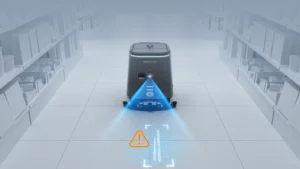
- Use LiDAR, SLAM, and 3D cameras to map complex spaces
- Navigate narrow aisles, high-traffic zones, and dynamic environments
- Avoid obstacles and reroute intelligently without stopping
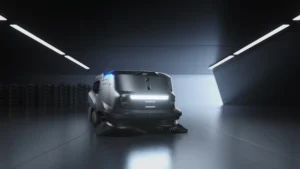
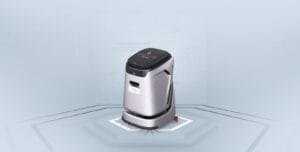
💡 Tip: Models like the MT1 offer top-tier autonomy with smart obstacle avoidance and adaptive mapping — critical for busy industrial zones.
✅ 2. Battery Life & Runtime
In a large facility, battery life equals productivity. You want:
- At least 3–6 hours of runtime per charge
- Auto-docking & self-charging capabilities
- Fast recharge or swappable battery options for multi-shift coverage
Downtime to charge = downtime for your ops. Choose wisely.
✅ 3. Cleaning Power & Coverage Area
Cleaning robots must do more than just roam around.
Key specs to look for:
- Wide cleaning path (ideally 60–80 cm or more)
- High m²/hour coverage (2,000+ per hour is strong)
- Adaptive brushes, strong suction, and adjustable cleaning modes for different floor types
💡 Pro tip: Look for edge-cleaning and corner reach features — many robots skip those spots.
✅ 4. Dustbin & Water Capacity
Smaller tanks = more frequent interruptions.
Choose robots with:
- Large dustbin and wastewater capacity (20+ liters ideal)
- Automatic water refill and disposal options
- Alerts for tank empty/full, so cleaning isn’t interrupted mid-cycle
This matters even more in large warehouses where manual emptying is a chore.
✅ 5. Ease of Integration & Setup
You don’t want a month-long setup or a PhD to run the thing.
Look for:
- Quick-mapping and self-learning features
- Simple user interface or mobile app control
- Remote monitoring and diagnostics
Your team should be able to train on it within hours, not weeks.
✅ 6. Safety Features
Industrial spaces can be unpredictable. Your robot must be:
- IP-rated for dust and water resistance
- Equipped with collision sensors, emergency stops, and traffic-awareness systems
- Visible with lights and audio alerts to keep staff safe
Safety is a must — especially in environments with forklifts and moving machinery.
✅ 7. Maintenance & Support
Ask:
- How often does it need maintenance?
- Are parts easily replaceable?
- Is support available locally or remotely?
A robot that constantly needs attention defeats the purpose of automation.
✅ 8. Data, Reports & Connectivity
Smart cleaning is measurable cleaning. Look for:
- Detailed usage logs
- Performance dashboards
- Integration with facility management systems (FMIS/IoT)
Bonus points if the robot alerts you about anomalies or provides predictive maintenance warnings.
Ready to Buy? Start With the MT1
At ServicePro Robotics, we recommend the MT1 — a powerhouse cleaning robot built for industrial performance:
✅ Long runtime
✅ Wide coverage
✅ Smart navigation
✅ Safety-first design
✅ Built-in reporting tools
🎯 Bonus: Get $1,500 Off Your First Robot
Right now, we’re offering a limited-time $1,500 discount on your first industrial cleaning robot.
Claim your offer here:
👉 serviceprorobotics.net/1500off-cleaning