Commercial cleaning has changed dramatically over the past few years. Rising labor costs, staffing shortages, and higher expectations for cleanliness have encouraged businesses to explore autonomous cleaning technology as a practical solution. From warehouses and manufacturing plants to hospitals, schools, airports, and retail stores, commercial cleaning robots are becoming an important part of modern facility management.
However, choosing the right robot isn’t simply a matter of selecting the newest model or the lowest price. Every facility has unique operational needs, and the best solution depends on the environment, the cleaning requirements, and the long-term objectives of the organization. Understanding these factors before making an investment can help businesses maximize efficiency while achieving a stronger return on investment.
Start by Understanding Your Facility
The first step in choosing a commercial cleaning robot is evaluating the environment where it will operate. Every facility presents different challenges. A warehouse typically requires a robot capable of covering large open areas while navigating around forklifts and inventory. Hospitals demand quiet operation, reliable obstacle detection, and consistent cleaning standards that support infection prevention. Retail stores need robots that can safely work around customers during business hours, while schools and universities often schedule cleaning during evenings and weekends.
Instead of focusing on the robot itself, begin by asking how your facility operates. Consider the size of the area that needs daily cleaning, the amount of foot traffic, the number of shifts, and whether cleaning takes place while employees or customers are present. These answers will help determine which type of autonomous solution best fits your business.
Identify Your Biggest Cleaning Challenges
Every organization has different reasons for investing in automation. Some struggle with labor shortages, making it difficult to maintain consistent cleaning schedules. Others are looking to reduce operating costs or improve cleaning quality across multiple locations. Large industrial facilities may need to remove dust and debris more efficiently, while healthcare organizations prioritize sanitation and consistency.
Understanding the problem you are trying to solve is just as important as choosing the equipment itself. A commercial cleaning robot should address specific operational challenges rather than simply replace existing equipment. When implemented correctly, automation allows cleaning staff to spend more time on detailed tasks while repetitive floor cleaning is handled independently.
Look Beyond Basic Cleaning Functions
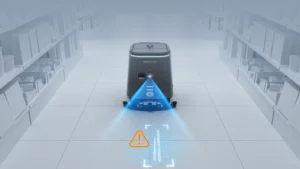
Modern autonomous cleaning robots do much more than scrub floors. Many solutions combine sweeping, scrubbing, vacuuming, and mopping into a single platform while automatically adjusting cleaning routes based on real-time conditions. Advanced navigation systems powered by LiDAR sensors, cameras, and artificial intelligence allow robots to safely avoid people and obstacles without interrupting daily operations.
Some models also include automatic docking stations where the robot can recharge its battery, refill clean water, and empty waste tanks without human intervention. These capabilities reduce downtime and make it possible to maintain consistent cleaning schedules throughout the day or overnight with minimal supervision.
Choosing a robot with features that match your operational needs will provide far greater value than simply selecting the model with the longest list of specifications.
Consider the Long-Term Cost, Not Just the Purchase Price
One of the most common mistakes organizations make is focusing only on the initial purchase price. While cost is certainly an important factor, the true value of a commercial cleaning robot comes from its ability to reduce operating expenses over time.
Businesses should evaluate the total cost of ownership rather than the upfront investment alone. Labor savings, improved productivity, lower water and chemical consumption, reduced equipment wear, and more consistent cleaning quality all contribute to the overall return on investment. In many cases, organizations discover that automation pays for itself much sooner than expected through increased operational efficiency.
A robot that costs more initially may ultimately deliver greater savings if it can clean larger areas faster, require less maintenance, and operate reliably for many years.
Data and Reporting Matter More Than Ever
Today’s commercial cleaning robots provide valuable operational data that was previously unavailable with traditional cleaning equipment. Facility managers can review cleaning reports, coverage maps, battery usage, operating hours, maintenance alerts, and productivity metrics through cloud-based dashboards.
This level of visibility allows organizations to verify completed cleaning tasks, optimize schedules, and identify opportunities for continuous improvement. For businesses managing multiple locations, centralized reporting also makes it easier to maintain consistent cleaning standards across every facility.
As organizations continue adopting data-driven decision making, these reporting capabilities have become an essential part of evaluating autonomous cleaning solutions.
Choose a Partner, Not Just a Product
Selecting the right commercial cleaning robot also means selecting the right technology partner. The equipment itself is only one part of a successful deployment. Installation, operator training, technical support, software updates, and ongoing maintenance all play an important role in ensuring long-term success.
Working with an experienced robotics provider gives organizations access to guidance throughout the implementation process, helping teams maximize the value of their investment while minimizing disruption to daily operations. A trusted partner can also recommend the most appropriate solution based on facility size, industry requirements, and operational goals instead of offering a one-size-fits-all approach.
A quick guide by robot type: autonomous sweepers handle dry debris across large spaces, robotic floor scrubbers wash and dry hard floors, and multi-purpose cleaning robots cover mixed floors with one machine. You can compare budgets in our cleaning robot pricing guide.
Making the Right Decision
Autonomous cleaning technology continues to evolve, offering organizations new ways to improve efficiency, reduce costs, and maintain cleaner environments. Choosing the right commercial cleaning robot begins with understanding your facility, identifying your operational challenges, and evaluating solutions based on long-term business value rather than initial cost alone.
Whether you manage a warehouse, hospital, manufacturing plant, school, airport, or commercial office, investing in the right autonomous cleaning solution can help your team work more efficiently while delivering a consistently higher standard of cleanliness.
If you’re considering commercial cleaning automation, the ServicePro Robotics team can help evaluate your facility and recommend the solution that best fits your operational needs. Contact us today to learn how autonomous cleaning can transform your facility management strategy.