Commercial cleaning has changed dramatically over the past few years. Rising labor costs, staffing shortages, and higher expectations for cleanliness have encouraged businesses to explore autonomous cleaning technology as a practical solution. From warehouses and manufacturing plants to hospitals, schools, airports, and retail stores, commercial cleaning robots are becoming an important part of modern facility management.
However, choosing the right robot isn’t simply a matter of selecting the newest model or the lowest price. Every facility has unique operational needs, and the best solution depends on the environment, the cleaning requirements, and the long-term objectives of the organization. Understanding these factors before making an investment can help businesses maximize efficiency while achieving a stronger return on investment.
Start by Understanding Your Facility
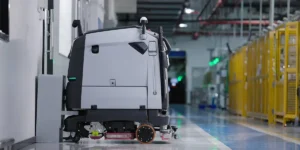
The first step in choosing a commercial cleaning robot is evaluating the environment where it will operate. Every facility presents different challenges. A warehouse typically requires a robot capable of covering large open areas while navigating around forklifts and inventory. Hospitals demand quiet operation, reliable obstacle detection, and consistent cleaning standards that support infection prevention. Retail stores need robots that can safely work around customers during business hours, while schools and universities often schedule cleaning during evenings and weekends.
Instead of focusing on the robot itself, begin by asking how your facility operates. Consider the size of the area that needs daily cleaning, the amount of foot traffic, the number of shifts, and whether cleaning takes place while employees or customers are present. These answers will help determine which type of autonomous solution best fits your business.
Identify Your Biggest Cleaning Challenges
Every organization has different reasons for investing in automation. Some struggle with labor shortages, making it difficult to maintain consistent cleaning schedules. Others are looking to reduce operating costs or improve cleaning quality across multiple locations. Large industrial facilities may need to remove dust and debris more efficiently, while healthcare organizations prioritize sanitation and consistency.
Understanding the problem you are trying to solve is just as important as choosing the equipment itself. A commercial cleaning robot should address specific operational challenges rather than simply replace existing equipment. When implemented correctly, automation allows cleaning staff to spend more time on detailed tasks while repetitive floor cleaning is handled independently.
Look Beyond Basic Cleaning Functions
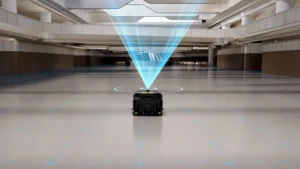
Modern autonomous cleaning robots do much more than scrub floors. Many solutions combine sweeping, scrubbing, vacuuming, and mopping into a single platform while automatically adjusting cleaning routes based on real-time conditions. Advanced navigation systems powered by LiDAR sensors, cameras, and artificial intelligence allow robots to safely avoid people and obstacles without interrupting daily operations.
Some models also include automatic docking stations where the robot can recharge its battery, refill clean water, and empty waste tanks without human intervention. These capabilities reduce downtime and make it possible to maintain consistent cleaning schedules throughout the day or overnight with minimal supervision.
Choosing a robot with features that match your operational needs will provide far greater value than simply selecting the model with the longest list of specifications.
Match the Robot Type to Your Floors and Tasks
A quick guide by robot type: autonomous sweepers handle dry debris across large spaces, robotic floor scrubbers wash and dry hard floors, and multi-purpose cleaning robots cover mixed floors with one machine. You can compare budgets in our cleaning robot pricing guide.
The table below adds what each type suits best and what to check before choosing one. For more on surfaces, see our guide to what floors commercial cleaning robots can clean.
| Robot type | Best suited to | Example in the ServicePro lineup | Check before choosing |
|---|---|---|---|
| Autonomous sweeper | Dry debris and dust across large hard floors, such as warehouses and plants | PUDU MT1 | Debris type and size, dust levels, and whether you also need wet cleaning |
| Autonomous floor scrubber | Washing and drying hard floors, such as lobbies, retail floors, and production areas | SC50 | Runtime in scrubbing mode, tank capacity, floor finish, and approved cleaning solutions |
| Multi-purpose cleaning robot | Mixed carpet and hard floors, such as offices, hotels, and schools | Oscar | Runtime in each mode and how the robot handles changes between floor types |
How to Evaluate Runtime, Battery Life, and Coverage
Runtime and coverage figures decide whether a robot can finish its work in the time you have, but they are easy to misread. A few checks make them comparable:
- Compare runtime by mode. Runtime varies widely with the task. ServicePro’s product page for Oscar, for example, lists 5 hours of scrubbing but 9 hours of silent mopping, and the SC50 page lists 2–2.5 hours of scrubbing and 5–7 hours of mopping. Compare the mode you will actually use.
- Use the right coverage figure. Some manufacturers list more than one cleaning rate. Oscar’s page lists 700–1,000 m²/h for all-covered cleaning and a higher range for spot cleaning. For planning full-area cleaning, use the all-covered figure, and expect real rates to be lower where there are many obstacles.
- Do the arithmetic for your space. Divide the area to be cleaned by a realistic coverage rate, then compare the result with the runtime per charge and your cleaning window. As an illustration, about 20,000 sq ft (roughly 1,860 m²) at 700 m²/h needs about 2.7 hours of cleaning time, before allowing for refilling, emptying, or obstacles.
- Account for charging and refilling. Check the charging time and whether a docking station can charge the robot and refill or drain its tanks without staff. On some models these functions require an optional station.
- Ask about battery life over time. Ask for the battery type, expected cycle life, warranty terms, and replacement cost. Our maintenance guide covers day-to-day battery care.
- Verify on your own floors. Measure runtime and coverage during a demo or Proof of Concept rather than relying on the specification sheet alone.
Consider the Long-Term Cost, Not Just the Purchase Price
One of the most common mistakes organizations make is focusing only on the initial purchase price. While cost is certainly an important factor, the true value of a commercial cleaning robot comes from its ability to reduce operating expenses over time.
Businesses should evaluate the total cost of ownership rather than the upfront investment alone. Labor savings, improved productivity, lower water and chemical consumption, reduced equipment wear, and more consistent cleaning quality all contribute to the overall return on investment. In many cases, organizations discover that automation pays for itself much sooner than expected through increased operational efficiency.
A robot that costs more initially may ultimately deliver greater savings if it can clean larger areas faster, require less maintenance, and operate reliably for many years.
Data and Reporting Matter More Than Ever
Today’s commercial cleaning robots provide valuable operational data that was previously unavailable with traditional cleaning equipment. Facility managers can review cleaning reports, coverage maps, battery usage, operating hours, maintenance alerts, and productivity metrics through cloud-based dashboards.
This level of visibility allows organizations to verify completed cleaning tasks, optimize schedules, and identify opportunities for continuous improvement. For businesses managing multiple locations, centralized reporting also makes it easier to maintain consistent cleaning standards across every facility.
As organizations continue adopting data-driven decision making, these reporting capabilities have become an essential part of evaluating autonomous cleaning solutions.
Check Safety Certifications and Compliance
A robot that works alongside staff and the public should come with documented safety and regulatory approvals, not only marketing claims. Ask the supplier which certifications the specific model holds for use in the United States, and ask for the certificates or listing numbers.
- Radio equipment. Robots that use Wi-Fi, mobile data, or Bluetooth need FCC equipment authorization to be marketed in the US. You can look up a device’s FCC ID to confirm it.
- Product safety listing. Ask whether the robot is listed by a Nationally Recognized Testing Laboratory and to which standard. For robotic floor-cleaning machines, the relevant standard is ANSI/CSA C22.2 No. 336, which covers rechargeable, battery-operated commercial robotic floor treatment machines. UL 3300 covers service robots more broadly.
- Certifications from other markets. Marks such as CE apply to other markets. For example, the SC50 product page lists CE, FCC, and NCC certification. A CE mark alone does not show a US safety listing, so ask specifically.
- Your own requirements. Involve your safety, risk, or EHS team early. Healthcare, food-handling, and hazardous areas often have extra rules, and your insurer may have requirements too.
Choose a Partner, Not Just a Product
Selecting the right commercial cleaning robot also means selecting the right technology partner. The equipment itself is only one part of a successful deployment. Installation, operator training, technical support, software updates, and ongoing maintenance all play an important role in ensuring long-term success.
Working with an experienced robotics provider gives organizations access to guidance throughout the implementation process, helping teams maximize the value of their investment while minimizing disruption to daily operations. A trusted partner can also recommend the most appropriate solution based on facility size, industry requirements, and operational goals instead of offering a one-size-fits-all approach.
Questions to Ask Before You Shortlist a Robot
- Which areas, floor types, and cleaning tasks will the robot cover, and which will stay manual?
- What is the realistic runtime and coverage in the mode we will use most?
- Which safety certifications does this model hold for US use, and can we see them?
- What reporting will we get, and who on our team will review it?
- Can we see it on our floors in a demo or test it in a Proof of Concept?
- What does deployment involve, from mapping to staff training? See our deployment guide.
- Should we buy or lease, and what is the total cost over the term? See leasing vs. buying and our ROI business case guide.
- If you are a facility service company running robots across client sites, how are multiple robots and locations managed? Our multi-location guide covers this.
Making the Right Decision
Autonomous cleaning technology continues to evolve, offering organizations new ways to improve efficiency, reduce costs, and maintain cleaner environments. Choosing the right commercial cleaning robot begins with understanding your facility, identifying your operational challenges, and evaluating solutions based on long-term business value rather than initial cost alone.
Whether you manage a warehouse, hospital, manufacturing plant, school, airport, or commercial office, investing in the right autonomous cleaning solution can help your team work more efficiently while delivering a consistently higher standard of cleanliness.
If you’re considering commercial cleaning automation, the ServicePro Robotics team can help evaluate your facility and recommend the solution that best fits your operational needs. Book a consultation to learn how autonomous cleaning can transform your facility management strategy.